Karnataka Tourism

Halebeedu

Halebidu Hoysala Temples: History, Architecture & Travel Guide

Halebidu, also commonly written as Halebeedu, is one of Karnataka’s most important heritage destinations. Once known as Dorasamudra, it served as the capital of the Hoysala Empire, & its surviving temples preserve some of the finest examples of mediaeval South Indian stone craftsmanship.

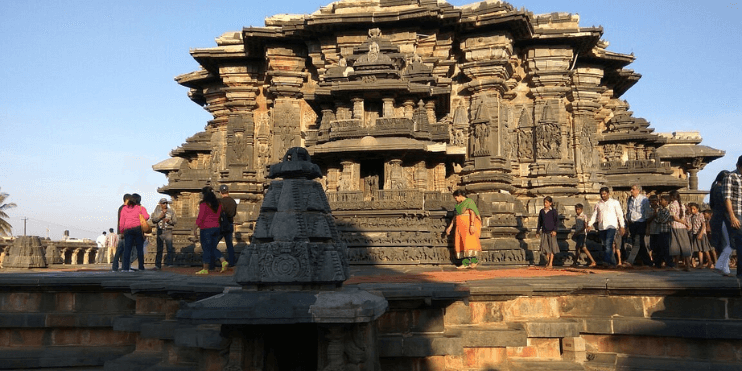
The biggest reason to visit today is the Hoysaleswara Temple, Halebidu, a 12th-century Shiva temple celebrated for its sculpted exterior, narrative friezes, twin sanctums, and distinctive Hoysala design. In 2023, Hoysaleswara Temple joined the UNESCO World Heritage List as one of the three components of the Sacred Ensembles of the Hoysalas, alongside Channakeshava Temple at Belur and Keshava Temple at Somanathapura.

Halebidu Heritage Guide at a Glance

Detail What to Know
Historic name Dorasamudra or Dwarasamudra
District Hassan, Karnataka
Main attraction Hoysaleswara Temple
UNESCO status Inscribed in 2023 as part of the Sacred Ensembles of the Hoysalas
Other attractions Kedareshwara Temple, Jain Basadis, Archaeological Museum
Best for Architecture, history, temple visits, photography
Best time to visit Halebidu October to March
Distance from Belur Around 17 km
Distance from Hassan Around 30 km
Nearest major railway station Hassan
Karnataka Tourism recommends October to March for visiting Halebidu and identifies Hoysaleswara Temple, Kedareshwara Temple, and the Archaeological Museum among its principal attractions. Hassan district places Halebidu approximately 17 km from Belur and 30 km from Hassan.

Why Is Halebidu Famous?

Tourists admire the intricate sculptures of the ancient Hoysaleswara Temple, a masterpiece of 12th-century Hoysala architecture.
Halebidu is famous because its monuments allow you to examine Hoysala architecture at unusually close range.

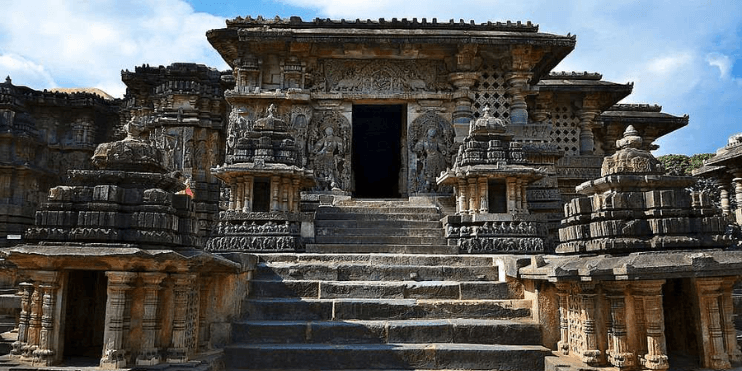
Instead of relying on huge plain walls or towering vertical structures, Halebidu Hoysala architecture draws your attention towards richly carved surfaces, projecting wall sections, sculptural bands, narrative scenes, and architectural geometry.

UNESCO identifies recurring Hoysala features such as stellate forms, circumambulatory platforms, multi-tiered friezes, and extensive sculptural galleries covering temple surfaces. These features helped establish a distinct Hoysala architectural identity in southern India during the 12th and 13th centuries.

For visitors, the appeal lies in slowing down. A quick walk around the temple shows the scale of the monument, but the finer details become visible only when you study individual carvings, friezes, doorways, and pillars.

Halebidu History: From Dorasamudra to Hoysala Capital

Understanding Halebidu history makes the temples considerably easier to appreciate.

The town was historically called Dorasamudra and developed into a major Hoysala capital. UNESCO’s nomination material records the city as a royal capital from around the mid-11th century into the 14th century and connects its old name with the large reservoir beside the temple complex. 

Under Hoysala rule, the region developed into an important political, artistic, and religious centre. Hindu and Jain monuments were built across the capital, reflecting the scale and cultural diversity of the settlement.

The city later experienced invasions and political decline, & its present name, Halebidu, came to be associated with the “old city”. What remains today gives visitors only part of the original urban landscape, but the surviving temples preserve the artistic sophistication for which the Hoysalas became known.

The 2023 UNESCO World Heritage Recognition

One of the most important updates missing from older Halebidu content is the site’s current UNESCO status.

In September 2023, UNESCO inscribed the Sacred Ensembles of the Hoysalas on the World Heritage List. The serial property includes:

  • Channakeshava Temple at Belur
  • Hoysalesvara Temple at Halebidu
  • Keshava Temple at Somanathapura

UNESCO recognized these temples for the artistic and architectural qualities of the Hoysala style and inscribed the property under criteria (ii) and (iv). 

Is Every Halebidu Temple Part of the UNESCO Listing?

No.

This distinction matters when discussing UNESCO Hoysala temples.

The Halebidu component of the World Heritage property centers on the Hoysalesvara Temple. Other monuments such as Kedareshwara Temple and the Jain Basadis are important parts of Halebidu’s wider heritage landscape, but they should not automatically be described as separate UNESCO World Heritage components.

Hoysaleswara Temple Halebid: The Main Heritage Attraction

The Hoysaleswara Temple Halebidu is the essential first stop.

The temple was consecrated in 1121 CE during the Hoysala period & stands beside the historic Dorasamudra reservoir. It is dedicated to Shiva and developed as a twin-shrine structure, with sanctums associated with Hoysalesvara and Shantalesvara. 

The scale of the sculptural program distinguishes it even among other Hoysala temples Karnataka visitors can explore.

What to Look for at Hoysaleswara Temple

1. The Twin-Shrine Design

The temple uses a dvikuta, or twin-shrine, arrangement connected through a common hall.

Understanding this layout before walking around the monument helps you recognise that you are looking at a carefully integrated architectural composition rather than two unrelated shrines.

2. Star-Like Architectural Geometry

The temple’s projecting wall surfaces and stellate forms create repeated angles around the exterior.

This design increases the amount of wall surface available for sculpture and creates changing patterns of light and shadow as you walk around the temple.

3. Narrative Stone Friezes

The outer walls are one of the most important features of Hoysaleswara Temple architecture.

Sequences depict episodes from the Ramayana, Mahabharata and other religious narratives, alongside rows of elephants, horses, lions, scrollwork, mythical creatures and divine figures. Hassan district specifically highlights the epic narratives carved along the exterior.

Rather than walking past these as decoration, follow individual bands around the temple. The repetition and variation make the craftsmanship easier to understand.

4. Large Sculptural Panels

Above the lower horizontal friezes are larger figures of deities and mythological subjects.

UNESCO highlights the extensive sculptural gallery as one of the defining features of the Hoysala style.

5. The Nandi Mandapas

Two Nandi pavilions stand towards the eastern side of the temple and relate to the twin Shiva shrines.

UNESCO specifically notes these Nandi mandapas as surviving elements of the Hoysalesvara ensemble. 

6. The Missing Temple Towers

Do not expect Hoysaleswara Temple to look like a South Indian temple dominated by a tall surviving tower.

UNESCO notes that the original shikharas are absent today and that there is no clear epigraphical evidence establishing their historic form. The monument’s significance instead survives strongly through its architecture, interior and extensive carved surfaces.

How Long Should You Spend at Hoysaleswara Temple?

Avoid reducing the visit to a quick photo stop.

Hassan district’s organized tourism route allocates around 1 hour and 35 minutes specifically to Hoysaleswara Temple. Travellers interested in architecture, photography or sculpture may want longer, particularly if using a local guide. 

Karnataka Tourism also recommends local guides because they can help visitors interpret the carvings and architectural details that are easy to miss without context.

Kedareshwara Temple Halebidu
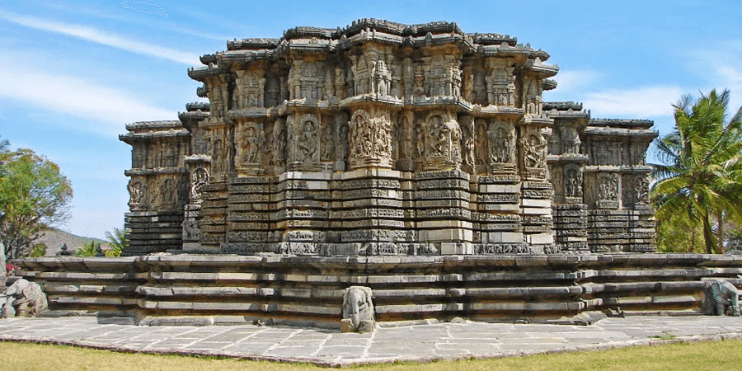
Stone Kedareshwara Temple showcases intricate carvings, reflecting Hoysala artistry and dedicated to Lord Shiva.

The Kedareshwara Temple Halebidu is smaller than the Hoysaleswara Temple but should remain part of a complete heritage visit.

Also dedicated to Shiva, it represents another important stage of Hoysala temple building and retains the highly articulated walls, carved details, and geometric forms associated with the style.

Its quieter setting can also make it easier to examine architectural details without spending the entire visit around Halebidu’s busiest monument.

Karnataka Tourism lists Kedareshwara Temple as one of the principal places to visit in Halebidu. 

Why Include Kedareshwara Temple?

Visit it to compare:

  • Temple scale
  • Star-shaped geometry
  • Sculptural detailing
  • Pillars and ceilings
  • Exterior friezes
  • Later developments in Hoysala design

Seeing several monuments rather than only Hoysaleswara gives you a clearer understanding of how varied Hoysala architecture could be.

Jain Temples and Basadis of Halebidu
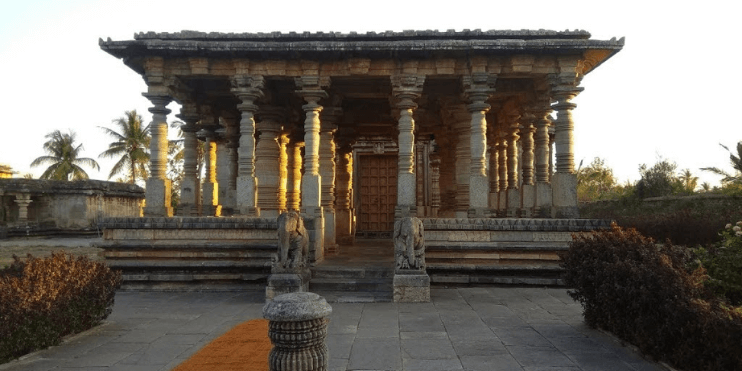
Stone Jain temple with ornate pillars, showcasing exquisite carvings and reflecting the spiritual focus of Jain philosophy.

The Jain temples Halebidu preserves are another important part of the former capital’s religious landscape.

The principal Jain Basadis Halebidu visitors encounter are associated with Parshvanatha, Shantinatha, and Adinatha. These monuments date from the Hoysala period and demonstrate that Halebidu’s architectural history extends beyond its major Shiva temples. 

Parshvanatha Basadi

Parshvanatha Basadi is particularly useful for visitors interested in Jain heritage and the religious diversity of medieval Karnataka.

Its pillars, shrine arrangement, and comparatively restrained character offer a useful contrast with the dense exterior sculpture of Hoysaleswara Temple.

Shantinatha and Adinatha Basadis

The neighboring Shantinatha and Adinatha monuments complete the Jain group and help place Halebidu within the wider religious landscape of the Hoysala capital.

When visiting, approach these monuments as active or historically sacred spaces rather than simply architectural backgrounds for photography.

Halebidu Archaeological Museum

The Halebidu Archaeological Museum is worth adding after seeing the temples.

Karnataka Tourism identifies the ASI-managed museum as one of Halebidu’s main attractions. Visiting it after the temple complex can provide additional archaeological context for the sculptures, architectural fragments, and wider history of the former Hoysala capital. 

Because museum schedules and closures can change, check the current operating information before arranging a tightly timed visit.

How to Read Hoysala Architecture While You Walk
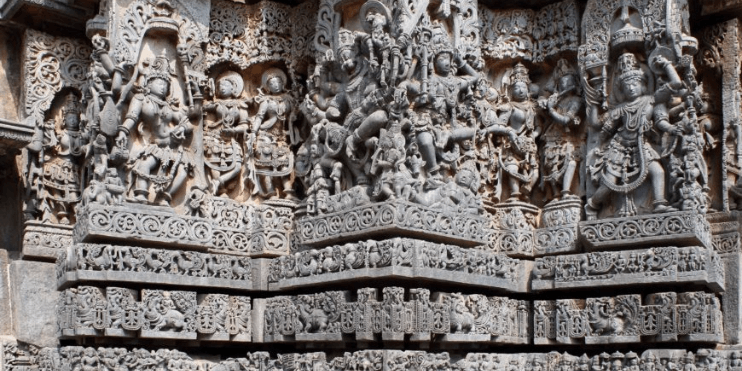
Intricate carvings on temple walls showcase scenes from mythology and daily life, reflecting Hoysala's rich cultural heritage.

You do not need to be an architect to appreciate the Halebidu Hoysala temples.

Use a simple sequence as you move around the building.

Start With the Temple Plan

Step back first and notice the projecting geometry and repeated angles.

Move to the Lowest Friezes

Look for elephants, horses, lions, vegetation, and other repeated bands.

Follow the Narrative Scenes

Move slowly around the building and watch for episodes from Hindu epics.

Look Up at the Larger Sculptures

The major deity panels reward closer viewing because jewellery, weapons, clothing and facial expressions are carved at an extraordinary level of detail.

Compare Exterior and Interior

The exterior is densely sculpted, while the interior shifts attention towards pillars, ceilings, halls and shrine spaces.

This approach turns the visit into an architectural exploration rather than a simple checklist stop.

Preservation of the Hoysala Heritage

Halebidu’s principal monuments are protected heritage structures, and Hoysalesvara Temple forms part of a legally protected UNESCO World Heritage property.

UNESCO notes that the essential architectural and sculptural attributes expressing the site’s Outstanding Universal Value remain intact despite historic alterations and the loss of some architectural elements. 

Visitors can support conservation through simple behaviours:

  • Do not touch or scratch carvings.
  • Avoid climbing on restricted architectural elements.
  • Follow photography restrictions.
  • Keep food away from monument surfaces.
  • Use designated pathways.
  • Maintain appropriate behaviour around sacred spaces.
  • Follow ASI and site staff instructions.

Karnataka Tourism also recommends modest clothing, comfortable walking shoes and respectful behaviour around the temple area.

Belur and Halebidu: Plan Both Hoysala Heritage Sites Together
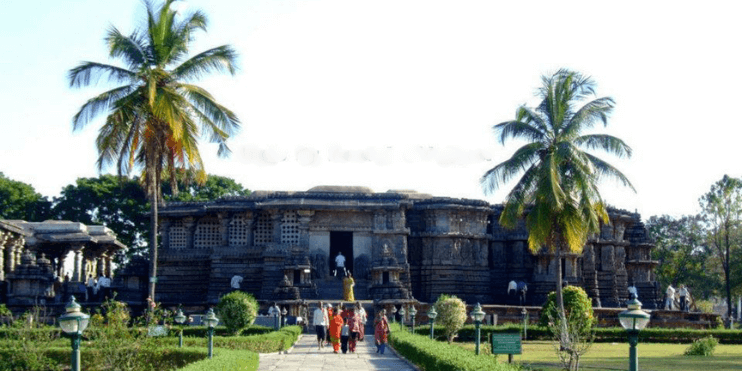
A temple nestled among vibrant green trees, showcasing the beauty of Halebeedu's historical architecture.

For most travellers, Belur and Halebidu make the strongest heritage combination.

Halebidu lies about 17 km from Belur, according to Hassan district tourism information. That proximity makes it practical to see the two major Hoysala centres during the same day when you start early and avoid adding too many unrelated stops. 

Morning: Belur

Begin with Channakeshava Temple at Belur.

This Vishnu temple is also part of UNESCO’s Sacred Ensembles of the Hoysalas, making the comparison with Halebidu particularly valuable. 

Afternoon: Halebidu

Continue to:

  1. Hoysaleswara Temple
  2. Archaeological Museum
  3. Kedareshwara Temple
  4. Jain Basadis, if time allows

This gives your Belur Halebidu itinerary a logical progression from one UNESCO Hoysala ensemble to another.

What Is Different Between Belur and Halebidu?

Belur and Halebidu should not be treated as interchangeable temples.

Belur’s Channakeshava Temple and Halebidu’s Hoysalesvara Temple demonstrate different architectural and devotional settings, while both share the elaborate sculptural language associated with Hoysala art. Karnataka Tourism describes the two towns as twin centres of Hoysala grandeur. 

Best Time to Visit Halebidu

The best time to visit Halebidu for general sightseeing is October to March.

Karnataka Tourism recommends this period because conditions are generally better suited to walking around the exposed temple complexes. 

October to March

Best for:

  • Temple exploration
  • Architecture photography
  • Heritage circuits
  • Combining Belur and Halebidu
  • Longer outdoor visits

April to May

Visits are still possible, but start earlier or visit later in the day to reduce exposure to midday heat.

Monsoon

The landscape becomes greener, but rain can affect outdoor exploration and photography. Carry appropriate footwear and rain protection.

How to Reach Halebidu

For travellers researching how to reach Halebidu, Hassan and Belur provide the most useful road connections.

From Hassan

Halebidu is approximately 30 km from Hassan. Hassan also provides a major rail connection for the region.

From Belur

Halebidu is approximately 17 km from Belur, which is why the two Hoysala destinations are commonly combined. 

By Rail

Hassan Railway Station is the nearest major railhead listed by Karnataka Tourism, at approximately 30 km from Halebidu. 

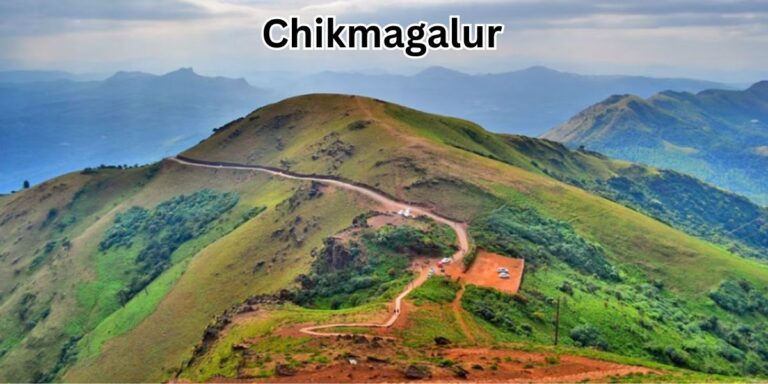
Halebidu From Chikmagalur

If you are planning Halebidu from Chikmagalur, treat it as part of a dedicated heritage day rather than squeezing it between multiple hill and waterfall attractions.

A Belur and Halebidu day works particularly well because the heritage sites are geographically connected and deserve enough time for walking and close viewing.

Practical Tips Before Visiting the Halebidu Temples

Keep these points in mind before visiting:

  • Start early if you are combining Belur and Halebidu.
  • Wear comfortable footwear because much of the experience involves walking.
  • Carry drinking water.
  • Use sun protection during warmer months.
  • Dress appropriately for temple spaces.
  • Consider a knowledgeable local guide.
  • Spend time walking around the entire Hoysaleswara exterior.
  • Check current monument and museum timings before departure.
  • Avoid relying on outdated entry-fee information.
  • Leave additional time if architecture or photography is a major interest.

Karnataka Tourism specifically recommends early morning or late-afternoon visits to avoid the strongest sun and notes that guides can add substantial value to the experience.

Planning a Wider Chikmagalur Heritage and Nature Trip?

Halebidu is in Hassan district, while our Ranga Taana property is in Tarikere Taluk in Chikmagalur district. We therefore recommend treating Halebidu as a dedicated heritage stop rather than describing our property as accommodation beside the temple.

If your Karnataka itinerary continues towards Kemmangundi and the Chikmagalur region after Belur and Halebidu, you can make Ranga Taana the next base for the nature-focused part of your trip.

Continue From Hoysala Heritage to Kemmangundi’s Hills

After a day focused on stone architecture and history, the next part of your trip can shift towards coffee-estate surroundings, waterfalls, and hill landscapes.

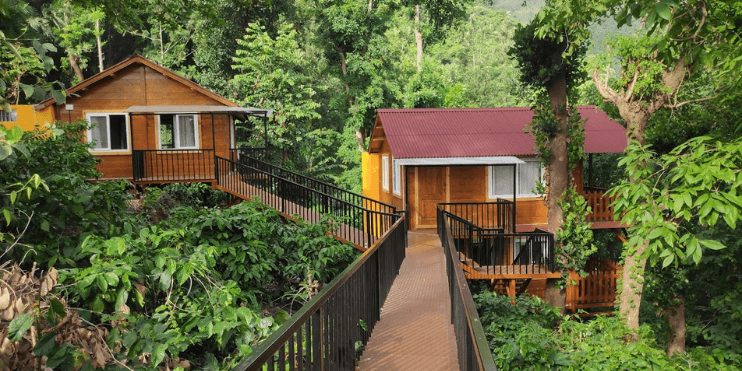
At Ranga Taana, our current accommodation includes wooden cottages, deluxe cottages and traditional cottages within our Chikmagalur setting.

Discover Halebidu Beyond a Quick Temple Stop

Two wooden houses nestled in a lush forest, showcasing a tranquil retreat surrounded by nature's beauty.
The Halebidu Hoysala temples reward travellers who slow down.

Begin with the Hoysaleswara Temple, follow its sculptural bands around the exterior, examine the twin-shrine arrangement and Nandi mandapas, then continue to Kedareshwara Temple, the Jain Basadis and the Archaeological Museum.

The 2023 UNESCO inscription has strengthened Halebidu’s global heritage significance, but the strongest reason to visit remains the experience of seeing Hoysala craftsmanship at close range. 

If your journey continues from Hassan district into Chikmagalur, you can then shift from heritage exploration to the hill and nature experiences around Kemmangundi with us at Ranga Taana.

Frequently Asked Questions

Why is Halebidu famous?

Halebidu is famous for its Hoysala temples, particularly Hoysalesvara Temple, and for having served as a capital of the Hoysala dynasty. Its temples are recognized for extensive stone sculpture, narrative friezes, and distinctive Hoysala architectural forms. 

Is Hoysaleswara Temple a UNESCO World Heritage Site?

Yes. Hoysaleswara Temple at Halebidu was inscribed on the UNESCO World Heritage List in 2023 as one of the three components of the Sacred Ensembles of the Hoysalas.

Which temples should I visit in Halebidu?

The main Halebidu temples to prioritise are Hoysaleswara Temple and Kedareshwara Temple. You can also visit the Jain Basadis and the Archaeological Museum. 

What is special about Hoysaleswara Temple architecture?

The Hoysaleswara Temple architecture is known for its twin-shrine plan, projecting and stellate forms, circumambulatory platform, sculptural galleries, narrative friezes and densely carved surfaces. 

Are Belur and Halebidu the same place?

No. They are separate historic towns. Halebidu lies approximately 17 km from Belur, but both contain major Hoysala temples and are commonly visited together. 

Can Belur and Halebidu be covered in one day?

Yes. A well-planned heritage day can include Belur in the morning and Halebidu in the afternoon. Avoid adding too many distant attractions because both temple complexes deserve time for walking and examining the carvings.

What is the best time to visit Halebidu?

October to March is the general best time to visit Halebidu for comfortable heritage sightseeing.

How far is Halebidu from Hassan?

Hassan district tourism places Halebidu approximately 30 km from Hassan. Regular road transport is available from both Hassan and Belur.

Is Kedareshwara Temple part of the UNESCO World Heritage Site?

The UNESCO serial property specifically identifies Hoysalesvara Temple as the Halebidu component of the Sacred Ensembles of the Hoysalas. Kedareshwara Temple remains an important protected Hoysala monument in Halebidu’s wider historic landscape. 

Is Halebidu worth visiting from Chikmagalur?

Yes, particularly if you are interested in architecture, history or temple heritage. Plan Belur and Halebidu as a dedicated heritage circuit instead of treating them as short stops between Chikmagalur’s hill attractions.

Enquire/Know more about Ranga Taana Resort

Best nature stay among resorts in Chikmangalur

Feature Image

Shettihalli Church – Beautiful Photography Spot in Chikmagalur

Shettihalli Church, often called the “Floating Church,” is nestled in the scenic town of Hassan, Karnataka. This 19th-century relic, with its haunting ruins, has transformed into a favorite among photographers and travelers alike. 

The church’s mysterious ambiance, especially when partially submerged during monsoons, offers a unique setting that sets it apart from other historical sites. It’s the perfect blend of nature, history, and architecture, making it a must-visit destination.

The church’s location along the Hemavati River provides a stunning backdrop, where the waters mirror its Gothic arches. Every season transforms the landscape around the church, offering visitors different perspectives to capture.

During the monsoon, the church appears to float, while in the dry season, the surrounding land creates a stark contrast against the weathered stone. This contrast makes Shettihalli a dynamic subject for photography, perfect for capturing nature’s impact on man-made structures.

The Historical Journey of Shettihalli Church: From Flourishing Chapel to Floating Ruin

A large, old, abandoned church stands alone in a field, a remnant of its vibrant past and colonial heritage.

The Origins of Shettihalli Church in the 1860s

Constructed by French missionaries in the 1860s, Shettihalli Church served the Christian community and local estate owners. It was a symbol of spiritual service and cultural convergence, reflecting the region’s colonial past. 

This grand structure was initially a vibrant place of worship, filled with stained glass and intricate interior designs. It became a central hub for both spiritual gatherings and social support, embodying the values brought in by its French founders.

Tip: For history buffs, reading up on the influence of French missionaries in Karnataka can provide deeper context during your visit.

Submersion and Abandonment: The Impact of the Hemavati Dam Construction in 1960

The construction of the Hemavati Dam in 1960 changed Shettihalli’s fate, leading to the displacement of several villages, including the church. As the dam redirected the waters of the Hemavati River, the church found itself submerged for months each year. 

This transformation turned the once-thriving church into a ruin but also imbued it with a new allure as a “floating church,” drawing curious visitors and photographers from around the world.

Note: The church is submerged from July to October, making boat rides a popular way to explore it up close during these months.

A Century-Old Legacy: Stories of Service and Cultural Importance

Beyond its architectural appeal, Shettihalli Church has a legacy of compassion and service. During its early years, it provided aid to local communities, regardless of their religious backgrounds, fostering a sense of unity. 

This history of service, combined with its striking visuals, creates a sense of reverence among those who visit as they reflect on its past and how it has evolved into a serene, solitary landmark.

Tip: Engage with local guides who can share anecdotes and lesser-known stories about the church’s past, enhancing your experience.

Unique Architecture: Gothic Ruins in an Indian Landscape

Gothic ruins of Shettihalli Church stand in a field, showcasing pointed arches and ornate stone carvings amidst the landscape.

Gothic Grandeur: Key Architectural Features that Define the Church’s Style

Shettihalli Church is a prime example of Gothic architecture, characterized by pointed arches, ribbed vaults, and ornate stone carvings. Despite its current state of ruin, the remnants of these elements hint at its former grandeur. 

The arches that rise above the waterline during the monsoon create an ethereal sight, while the stonework showcases the craftsmanship of the era.

A Visual Contrast: How the Gothic Ruins Stand Out Against Karnataka’s Lush Scenery

The striking contrast between the weathered, dark stone of the church and the vibrant greenery of the surrounding landscape creates a dramatic visual effect. 

This contrast is further amplified during sunrise or sunset, as the light plays across the ruins, casting shadows that add depth to photographs. It’s this interplay of light, structure, and nature that makes Shettihalli a unique destination.

Note: For best results, time your visit for a golden hour—either early morning or late afternoon—for the most captivating photos.

Weathered by Time: The Erosion and Transformation of the Church into a Timeless Ruin

Decades of submersion and exposure to the elements have left the church in a state of beautiful decay. The once-smooth stone surfaces have eroded, creating a texture that tells the story of its resilience. 

The ruins stand as a testament to how nature can transform human creations, offering a poetic perspective for those who visit.

Tip: Bring along a macro lens to capture the intricate textures of the stonework up close.

Gothic Architecture and Scenic Appeal: A Visual Feast for Photographers

An aerial view of Shettihalli Church, showcasing its Gothic architecture amidst serene waters and intricate stone details.

Intricate Details: The Stonework, Arches, and Vaults that Make the Church Unique

Even in its ruined state, the intricate details of Shettihalli Church are visible to the keen observer. The arches, some of which remain partially intact, provide a sense of the scale and elegance that the church once possessed. 

The design elements, inspired by European Gothic styles, seamlessly blend with the natural setting, creating a scene that is both otherworldly and rooted in history.

Note: For photographers, focusing on these details can bring out the church’s timeless beauty, perfect for close-up shots.

Crafted with Care: How Traditional Materials like Jaggery and Eggs Enhanced Its Structure

The unique construction of Shettihalli Church included local materials like jaggery and eggs, known for adding strength and durability to the mortar. This technique, which has been used in various historical buildings across India, speaks to the fusion of local and European building practices. 

These materials have helped the church withstand decades of submersion and erosion, making it a resilient landmark.

Tip: Learning about traditional building methods can provide a deeper appreciation for the church’s enduring structure.

A Ruinous Beauty: Why the Church’s Decay Adds to Its Photographic Appeal

The decaying walls and collapsed roofs create a hauntingly beautiful scene, offering endless opportunities for creative photography. Many visitors find that the ruinous state of the church evokes a sense of mystery and nostalgia, making each photograph feel like a captured moment in time.

Note: Play with black-and-white filters to emphasize the contrast between the church’s structure and the surrounding landscape.

The Seasonal Magic: Shettihalli’s Ever-Changing Water Levels

Ruins of a submerged church in a lake, partially visible during the monsoon, creating a mystical and atmospheric scene.

Monsoon Mystique: Visiting the Submerged Church During the Rainy Season

From July to October, Shettihalli transforms into a floating church, with only the tops of its arches visible above the water. This period creates an otherworldly scene as the church appears to rise out of the water, shrouded in mist. 

The monsoon skies add a dramatic backdrop, making this season ideal for photographers seeking a moody, atmospheric shot.

Tip: Hire a local boatman to get a closer view of the submerged church during the monsoon, offering unique angles for photos.

Summer Revelation: When the Church Emerges in Full, Revealing Hidden Details

As the water recedes in the summer, the full structure of Shettihalli Church is revealed. Visitors can walk up to the church and explore the remnants of its interior. 

This season offers a different perspective, where the dry riverbed and exposed architecture allow for closer inspection of the building’s craftsmanship.

Note: Carry plenty of water and sun protection if visiting during summer, as the area can get hot and dry.

Perfect Reflections: Capturing Stunning Shots of the Church Against the Monsoon Skies

The monsoon season provides a unique opportunity for reflection photography. The still waters of the Hemavati River create a perfect mirror for the church’s arches and the surrounding greenery. 

These reflections, combined with dramatic cloud formations, can turn even a simple snapshot into a breathtaking image.

Why Shettihalli Church is a Must-Visit for Instagram Enthusiasts

A large church ruins on an island, surrounded by a serene lake, perfect for stunning photography and social media posts.

A Photographer’s Paradise: How the Church’s Ruins Create a Stunning Backdrop

With its weathered arches, open skies, and reflective waters, Shettihalli Church offers endless opportunities for photographers. Its isolated location and haunting beauty make it ideal for both landscape shots and close-up captures. 

Many travelers find that every angle tells a different story, providing rich material for social media feeds.

Note: For an Instagram-worthy shot, try capturing the church at sunset, when the light creates a magical glow over the waters.

Storytelling Through Images: Why Travelers Share Their Shettihalli Adventures Online

Visitors to Shettihalli Church often find that its atmosphere lends itself to storytelling through photography. The church’s ruins, shrouded in mist or bathed in golden sunlight, create a narrative of time and nature reclaiming human creations. 

Each photograph of the church carries a sense of mystery and tranquility, making it an ideal spot for those who enjoy creating visually captivating stories for their social media followers.

Tip: Pair your photos with captivating captions about the church’s history or your experience to create engaging posts for your audience.

From Filters to Frames: Tips for Capturing the Best Shots at Shettihalli Church

To make the most of Shettihalli Church’s stunning scenery, consider using wide-angle shots to capture the entire structure and its surroundings. For a more intimate feel, focus on close-ups of the stonework or the church’s reflection in the water. 

You can bring depth to your photographs and bring out the textures of the ruins by using natural light, especially in the golden hour.

Note: To bring out the rich tones of the stone and the lush vegetation surrounding the church, use editing programs to adjust the colors and contrast in your images.

Visiting Shettihalli Church: Your Complete Travel Guide

The ruins of an old church stand isolated, surrounded by nature, showcasing a blend of history and serene landscapes.

Best Times to Visit: Choosing Between the Monsoon’s Mystique and Summer’s Serenity

Choosing when to visit Shettihalli Church can offer entirely different experiences. The monsoon season (July to October) presents a unique opportunity to see the church partially submerged, creating a surreal view that’s perfect for dramatic photographs. 

In contrast, visiting from December to May allows you to explore the church’s full structure and get up close to the ruins without water covering its base.

Tip: For the best of both worlds, plan a visit in early July or late October when the water levels are just beginning to rise or recede.

Reaching the Ruins: Directions from Bangalore, Hassan, and Other Major Cities

Shettihalli Church is approximately 200 km from Bangalore, making it a feasible weekend trip. The most convenient way to reach the church is by car, following the NH75 route to Hassan. 

From there, the church is a short drive, with signs leading to Shettihalli village. Alternatively, visitors can take a train to Hassan Railway Station and hire a cab for the remaining 25 km to the site.

Note: Be sure to fill up on fuel and carry cash for tolls and local expenses, as ATMs may be scarce near the church.

Plan Your Trip: Travel Essentials, Packing Tips, and What to Expect on Arrival

While visiting Shettihalli, pack light but carry essentials such as water, snacks, and sun protection, as the area needs nearby eateries. The surroundings are peaceful but can be remote, so it’s wise to keep a first-aid kit and some insect repellent. 

Be prepared for rustic conditions and bring the right pair of walking shoes to explore the uneven terrain around the church.

Tip: Consider combining your visit with a trip to nearby attractions like Gorur Dam for a well-rounded experience in the Hassan region.

Explore More Around Shettihalli: Attractions and Activities Near the Church

A large dam with water cascading over it, surrounded by scenic views and nearby attractions like Gorur Dam and Hasanamba Temple.

Nearby Gems: Discover Gorur Dam, Hasanamba Temple, and More

Shettihalli Church is situated near several other attractions that are worth a visit. The Gorur Dam offers panoramic views of the backwaters and makes for a great spot to relax after visiting the church. 

Hasanamba Temple, located in Hassan, is another spiritual site with a rich history, attracting pilgrims and history enthusiasts alike. Combining these sites with a visit to Shettihalli creates a varied and enriching travel itinerary.

Note: Plan your route to include stops at these sites, allowing extra time for each location to enjoy the experience fully.

Where to Stay: Top Accommodations Close to Shettihalli for a Comfortable Visit

A serene pool surrounded by lush greenery, offering a tranquil escape in nature's beauty. Perfect for relaxation and exploration.

If you’re planning to extend your visit to Shettihalli Church, we at Ranga Taana Resort would love to welcome you. Nestled near the serene beauty of Kemmangundi, our resort offers a tranquil escape for travelers. As one of the best resorts near Kemmangundi, we provide easy access to stunning natural attractions and breathtaking viewpoints, making it the perfect base for your explorations.

Our resort in Kemmangundi offers well-appointed rooms and modern amenities, ensuring a comfortable stay. Located near the Kemmangundi Hill area, we provide an ideal retreat for those seeking relaxation after a day of sightseeing. Our proximity to Shettihalli Church and other local attractions makes us a convenient choice for visitors who wish to enjoy the beauty of the region.

At Ranga Taana Resort, we are passionate about offering our guests a seamless blend of comfort and nature. As a Kemmangundi resort, our location is perfect for nature enthusiasts who want to explore the dense greenery and scenic landscapes of the area. We’re here to ensure that your stay with us is as peaceful and enjoyable as possible.

Tip: Book accommodations in advance, especially during the monsoon season, as the area attracts more visitors during this time.

A Perfect Day Out How to Plan a Day Trip or Weekend Escape to Shettihalli

Shettihalli Church can be visited as part of a relaxed day trip from Bangalore or a more leisurely weekend escape. Start your day early to avoid the afternoon heat and explore the church and its surroundings at a gentle pace. For a full-day adventure, combine your visit with stops at local eateries in Hassan or a picnic by the riverbanks.

Note: Pack a picnic to enjoy on the banks of the Hemavati River, taking in the serene views of the church and surrounding landscape.

Conclusion

Shettihalli Church stands as a testament to the passage of time, where history meets the forces of nature in a stunning display. Its combination of Gothic architecture, serene surroundings, and seasonal transformations makes it a destination unlike any other in Karnataka. For those with an eye for beauty, it offers endless photographic opportunities and a chance to connect with a place where time has seemingly stood still.

The echoes of prayers, the collapse of its roof, and the rise of the Hemavati River have all shaped the Shettihalli Church into what it is today—a silent witness to the changes of the past century. Standing on its grounds, you can almost imagine the congregation that once filled its halls, giving a tangible sense of history that lingers in the air.

Make your visit to Shettihalli Church even more special by staying with us at Ranga Taana Resort, the best resort near Kemmangundi. Enjoy a relaxing stay at our Kemmangundi Hill resort, where modern comforts meet the beauty of nature. Book your stay at our resort in Kemmangundi for a peaceful retreat and unforgettable experience amidst the stunning landscapes.

Enquire/Know more about Ranga Taana Resort

Best nature stay among resorts in Chikmangalur

Feature Image

Chikmagalur – A Hidden Paradise for Coffee, Nature & Adventure

Beauty like Chikmagalur is seen when nature flourishes with the best of art. This heaven on earth is situated in Karnataka. Beautiful scenes in movies or a poet’s imagination of heaven are embodied here. Sitting in the forest of Chikmagalur while sipping coffee, one feels a sense of peace in the mind.

A Natural Haven for the Soul

A breathtaking mountain view with clouds, capturing the serene beauty of nature and the tranquility of the surrounding landscape.

When you are in the forest with a cup of coffee in one hand and listen to birds chirping, you feel like forgetting all the pains, sorrow, and depression of the world and getting lost in nature. Taking a dip in Chikmagalur village’s waterfall, home to elephants, leopards, and tigers, is a once-in-a-lifetime experience. Chikmagalur is like a journey to heaven for those seeking peace in nature’s lap.

Trekking enthusiasts are madly in love with Chikmagalur. Trekking on the hills amidst the cold winds and through the thickets of the forest preserves the memories of an adventurer’s lifetime. 

Often referred to as the ‘Coffee Land of Karnataka,’ this enchanting town is not just about aromatic coffee but also about rich history, mesmerizing landscapes, and an array of activities that make for an unforgettable journey. Whether you’re seeking adventure or tranquility, Chikmagalur offers a perfect blend.

Chikmagalur is a scenic hill station in the western part of Karnataka, India. Nestled in the Western Ghats, it is famous for its lush landscapes, serene environment, and pleasant climate. It is a popular getaway for nature lovers and those seeking a tranquil retreat.

Coffee Plantations

A small hut nestled in a tea plantation, surrounded by lush greenery and a cascading waterfall in the background.

Chikmagalur is often called the “Coffee Land” of Karnataka due to its extensive coffee plantations. The region’s ideal altitude and climate contribute to cultivating high-quality Arabica and Robusta coffee beans. Visitors can explore these plantations, learn about the coffee production process, and enjoy fresh coffee brewed from the source.

Waterfalls of Chikmagalur: Nature’s Majestic Art

A majestic waterfall cascades down, embraced by lush green trees, creating a serene and picturesque natural setting.

The area is also celebrated for its beautiful waterfalls. Some of the most notable ones include:

Hebbe Falls: A stunning waterfall located about 10 kilometers from Chikmagalur. It cascades down from around 168 meters, creating a refreshing pool at its base. The falls are surrounded by dense forests and coffee plantations, offering a serene and picturesque setting.

Kalhatti Falls: Situated near Kalhatti village, Kalhatti waterfall is about 122 meters tall and is known for its unique charm. It’s a bit of a trek to reach, but seeing the water flowing down the rocky terrain is worth the effort.

Jhari Falls: Also known as the “Buttermilk Falls,” Jhari Falls is a beautiful and less crowded waterfall. It’s located near the Kemmangundi hill station and is great for a peaceful picnic.

Chikmagalur: Where Adventure Meets Serenity

A breathtaking view from the summit of a mountain in India, showcasing lush valleys and distant hills under a clear sky.

In addition to coffee plantations and waterfalls, Chikmagalur boasts a range of natural attractions:

Mullayanagiri Peak: The highest peak in Karnataka offers panoramic views of the surrounding hills and valleys. This is one of the most popular places for trekking and nature walks.

Kemmangundi: Another hill station near Chikmagalur, known for its beautiful gardens, pleasant climate, and scenic viewpoints.

Baba Budangiri: A historical and religious mountain range named after the Sufi saint Baba Budan. The area is known for its ancient caves and scenic beauty.

Chikmagalur’s serene environment, coffee plantations, and beautiful waterfalls make it an ideal destination for a relaxing retreat amidst nature.

One remarkable coffee estate near a waterfall in the Chikmagalur region is specifically the Ranga Taana Resort. This estate offers a unique blend of coffee cultivation and natural beauty, set against the backdrop of lush green landscapes and cascading waterfalls.

Chikmagalur offers some fantastic trekking opportunities for adventure enthusiasts and nature lovers. Nestled in the Western Ghats, the region provides diverse trekking routes with breathtaking landscapes, lush forests, and panoramic views. Here are some notable trekking experiences in Chikmagalur:

Mullayanagiri Trek

A man sits atop Mullayanagiri, Karnataka's highest peak, enjoying breathtaking views of hills and valleys below.

  • Overview: Mullayanagiri is the highest peak in Karnataka, standing at about 1,930 meters above sea level. The trek to Mullayanagiri is one of the most popular in the region due to its stunning vistas and relatively moderate difficulty level.
  • Difficulty: Moderate
  • Duration: 2 to 4 hours (one way)
  • Highlights: This trek’s view is breathtaking amidst undulating hills and valleys. You’ll find a small shrine dedicated to Lord Shiva at the summit. Dense forests surround the trail, which is well-marked, making it accessible for most trekkers.

Kemmangundi Trek

Lush green hills of Kerala, showcasing scenic viewpoints and cascading waterfalls along the trekking trails of Kemmangundi.

  • Overview: Kemmangundi, also known as the “Queen of the Hills,” is a charming hill station with various trekking trails. The trek to the top of Kemmangundi offers spectacular views of the surrounding coffee plantations and valleys.
  • Difficulty: Easy to Moderate
  • Duration: 3 to 5 hours
  • Highlights: Along the trek, you’ll pass through picturesque landscapes, including the lush gardens of the Z-point, which offers a panoramic view of the plains below. The trek also passes by scenic viewpoints and cascading waterfalls.

Baba Budangiri Trek

Panoramic view from Baba Budangiri summit, showcasing lush coffee estates and ancient caves amidst diverse mountain terrain.

  • Overview: Baba Budangiri, also known as the Dattagiri Hills, is a range of mountains with both natural beauty and historical significance. The trek here offers a blend of scenic beauty and cultural heritage.
  • Difficulty: Moderate to Challenging
  • Duration: 4 to 6 hours
  • Highlights: The trek includes diverse terrain, from dense forests to rocky paths. The area is known for its ancient caves and the revered Baba Budan shrine. The views from the top are panoramic and include views of the surrounding coffee estates.

Hebbe Falls Trek

A dirt road winds through a lush green hillside, leading to a serene waterfall surrounded by dense forests and coffee plantations.

  • Overview:  A challenging but rewarding trek through dense forests and coffee plantations takes one to the beautifully serene waterfall.
  • Difficulty: Moderate
  • Duration: 2 to 3 hours
  • Highlights: The trail is surrounded by lush greenery and coffee plantations, making it a pleasant trek. The waterfall is a highlight, with its cascading water creating a serene pool below.

Kemmanagundi to Raj Bhavan Trek

  • Overview: This trek is less frequented and offers a chance to experience the more serene and less commercialized parts of Chikmagalur.
  • Difficulty: Moderate
  • Duration: 3 to 5 hours
  • Highlights: The trek includes scenic views, lush vegetation, and a visit to the Raj Bhavan, a historical bungalow used by the British during colonial times. The trail provides a more off-the-beaten-path experience.

Ranga Taana Resort: A Retreat in the Coffee Land

Two rustic wooden cabins nestled in a lush forest, surrounded by vibrant greenery and rolling hills of the Western Ghats.

Location and Landscape

Ranga Taana Resort is situated in the scenic Western Ghats, which provides a perfect environment for coffee cultivation. The estate is surrounded by rolling hills, dense forests, and vibrant greenery, creating a picturesque setting. One of its standout features is its proximity to Hebbe Falls, one of the most beautiful waterfalls in Chikmagalur.

Coffee Cultivation

At Ranga Taana Resort, visitors can explore expansive coffee plantations where both Arabica and Robusta beans are grown. The estate offers guided tours that provide insights into coffee cultivation, from planting and harvesting to processing and roasting. Guests can also experience the rich aroma and taste of freshly brewed coffee from beans on the estate.

Waterfall Experience

Hebbe Falls, located not far from the estate, adds to the charm of Ranga Taana Resort. The waterfall is known for its breathtaking beauty and the serene environment that surrounds it. Visitors can enjoy a short trek through the lush forest to reach the falls, relaxing by the pool of crystal-clear water at the base. The combination of the falls’ cascading water and the lush coffee plantations makes for a stunning natural spectacle.

Accommodations and Activities

A cozy bed in a serene room at Kadamba Resort, surrounded by nature and offering a tranquil retreat for guests.

Ranga Taana Resort provides comfortable accommodations for guests, often in the form of traditional plantation cottages or lodges that blend seamlessly with the natural surroundings. Activities at the estate include guided tours of the coffee plantations, nature walks, bird watching, and excursions to nearby waterfalls and viewpoints. The estate’s tranquil setting and personalized service ensure a memorable and immersive experience.

Culinary Delights

Guests at the estate can enjoy a variety of culinary experiences, including coffee tastings and traditional Karnataka cuisine. Meals often feature fresh, locally sourced ingredients, enhancing the overall experience of staying at the estate.

Ranga Taana Resort offers a unique opportunity to immerse yourself in the world of coffee while enjoying the stunning natural beauty of Chikmagalur, including the nearby Hebbe Falls. Combining coffee, lush landscapes, and waterfalls creates a genuinely enchanting retreat.

Ranga Taana Resort, a charming destination nestled within a coffee estate, is accessible via a slight 400-meter ascent from the main road; here in Chikmanglur, the evening bonfire and picturesque sunset added to the relaxed ambiance. Overall, Ranga Taana seems better suited for bachelor getaways.

Why Stay at Ranga Taana Resort?

A serene pool nestled among lush trees and vibrant bushes, offering a tranquil escape in nature's embrace.

Staying at the Ranga Taana Resort with family would be an unforgettable experience. The resort is located in the heart of the mountains and offers breathtaking views from every angle. The rooms are spacious, clean, and well-equipped, with all amenities. The real highlight of this resort is the waterfalls.

Ranga Taana Resort is located in Tarikere Taluk, Chikmagalur, Karnataka. Ranga Taana is the top destination to stay, whether you are with friends, family, or a single soul. Ranga Taana is the best resort in Kemmanagundi to spend your vacation.

To experience the best of Chikmagalur’s hospitality and natural beauty, consider booking your stay at Ranga Taana. Secure your reservation early to enjoy this tranquil retreat in the heart of the coffee plantations.

Enquire/Know more about Ranga Taana Resort

Best nature stay among resorts in Chikmangalur

Feature Image

Places To Visit in Shivamogga, Chikmagalur – Explore Nature, Heritage & Wildlife

Nestled in the heart of Karnataka, Shivamogga is a hidden gem that promises an enriching experience for travelers. With its lush landscapes, rich history, and vibrant culture, Shivamogga offers a perfect blend of nature and heritage. Whether you’re an adventure enthusiast, a history buff, or a nature lover, Shivamogga has something for everyone. This guide will take you through the top attractions in and around Shivamogga, providing insights and tips to make your visit memorable.

Shivamogga

Aerial view of Shivamogga showcasing a winding river flowing through the town, surrounded by lush greenery and urban structures.

Located in the Malnad region of Karnataka, Shivamogga is known for its scenic beauty and pleasant climate. The city is surrounded by the Western Ghats, which adds to its picturesque landscapes. Shivamogga enjoys a moderate climate throughout the year, making it an ideal tourist destination. The region has a rich cultural heritage that dates back to ancient times.

“Note: Shivamogga is also known as the ‘Gateway to Malnad’ due to its strategic location in the Western Ghats.”

Top Tourist Places in Shivamogga

Jog Falls

Jog Falls, a majestic waterfall, flows powerfully amidst a dense forest, showcasing nature's beauty and tranquility.

Jog Falls, one of India’s highest waterfalls, is a breathtaking sight to behold. The falls cascade down from 830 feet, creating a majestic spectacle. The best time to visit Jog Falls is during the monsoon season when the water flow is at its peak. Visitors can enjoy various viewpoints and take stunning photographs of this natural wonder.

“Visit the nearby viewpoint at Watkins Platform for a panoramic view of the falls.”

Kodachadri Hill

Aerial view of Kodachadri Hill showcasing majestic mountains and clouds scattered across the sky.

Kodachadri Hill is a haven for trekking enthusiasts and nature lovers. The hill offers various trekking routes, each providing an exhilarating experience through dense forests and scenic landscapes. Besides its adventure offerings, Kodachadri is known for its historical significance, housing the ancient Mookambika Temple. The hill is home to diverse flora and fauna, making it a nature lover’s paradise.

“Tip: Hire a local guide for the trek to ensure a safe and informative journey.”

Kundadri Hill

A group of people stands atop Kundadri Hill, gazing over the expansive valley below, surrounded by breathtaking scenery.

Kundadri Hill is famous for its serene atmosphere and historical significance. The hill is home to a 17th-century Jain temple, which adds a spiritual dimension to the visit. The trek to Kundadri Hill is relatively easy, making it accessible for all age groups. The top panoramic views are breathtaking, providing a perfect backdrop for meditation and relaxation.

“Note: Early morning or late afternoon visits are ideal to avoid the midday heat and enjoy the serene environment.”

Tyavarekoppa Lion and Tiger Safari

A serene scene of two lions lounging in the grass at Tyavarekoppa Lion and Tiger Safari, embodying tranquility in nature.

The Tyavarekoppa Lion and Tiger Safari offers a unique opportunity to witness majestic animals in their natural habitat. The safari park is home to lions, tigers, and other wildlife species. Visitors can enjoy a guided safari tour, which provides insights into the conservation efforts and the behavior of these magnificent creatures.

“The safari park also has a small zoo with other animals and birds, making it a perfect family outing.”

Historical and Cultural Attractions

Keladi and Ikkeri

A serene temple in Keladi and Ikkeri, encircled by vibrant, lush green grass, showcasing nature's beauty and tranquility.

Keladi and Ikkeri are twin towns known for their rich historical and architectural significance. The temples in these towns showcase the exquisite Dravidian style of architecture. The Rameshwara Temple in Keladi and the Aghoreshwara Temple in Ikkeri are prime examples of the region’s historical heritage. These sites offer a glimpse into the grandeur of the bygone era and the artistic prowess of ancient craftsmen.

“Tip: Engage a local historian as a guide to gain deeper insights into the temples’ history and architecture.”

Gajanur Dam

Gajanur Dam prominently displayed, featuring water flowing over its edge, illustrating the blend of natural beauty and human design.

Gajanur Dam, built across the Tunga River, is a significant regional irrigation project. The dam supports agriculture and provides a picturesque setting for visitors. The serene environment and scenic views make it a popular spot for picnics and day trips. The dam area is also home to various species of birds, making it a haven for bird watchers.

“Note: Carry a pair of binoculars to enhance your bird-watching experience at Gajanur Dam.”

Sakrebailu Elephant Camp

Entrance to Sakrebailu Elephant Camp park featuring a sign that reads "The Forest," inviting visitors to explore nature.

Sakrebailu Elephant Camp offers a unique experience of interacting with elephants in a natural setting. Visitors can watch elephants being bathed, fed, and trained by mahouts. The camp is excellent for learning about elephant conservation and the bond between mahouts and elephants. It’s a perfect spot for families and children to get close to these gentle giants.

“Visit the camp early in the morning to catch the elephants’ bathing and feeding sessions.”

Natural Wonders in Shivamogga

Agumbe

A vibrant green forest in Agumbe, framed by majestic mountains in the background, showcasing nature's beauty.

Agumbe, often called the ‘Cherrapunji of the South,’ is famous for its rainforests and stunning sunsets. The region receives heavy rainfall, contributing to its lush greenery and rich biodiversity. The sunset viewpoint in Agumbe offers a mesmerizing view of the sun setting over the Western Ghats. The area is also known for its medicinal plants and herbs, making it a place of ecological significance.

Sharavathi Wildlife Sanctuary

A stunning view of multiple waterfalls cascading through the lush greenery of Sharavathi Wildlife Sanctuary's forest.

Sharavathi Wildlife Sanctuary is a paradise for nature enthusiasts and wildlife photographers. The sanctuary is home to various flora and fauna, including endangered species like the Lion-tailed Macaque. Visitors can indulge in bird watching, nature walks, and wildlife safaris. The sanctuary’s diverse ecosystem makes it a vital conservation area in the Western Ghats.

“Note: Obtain necessary permits in advance for wildlife safaris to avoid any last-minute hassles.”

Bhadra Wildlife Sanctuary

Entrance to Bhadra Wildlife Sanctuary, featuring lush greenery and a welcoming sign for the elephant sanctuary.

Bhadra Wildlife Sanctuary, a part of the Bhadra Tiger Reserve, is known for its rich wildlife and dense forests. The sanctuary offers sightings of tigers, leopards, and other wildlife species. Eco-tourism initiatives in the sanctuary promote sustainable travel and conservation awareness. Visitors can enjoy jeep safaris, bird watching, and guided nature walks within the sanctuary.

Places to Visit Near Shimoga

Honnemaradu

A serene view of Honnemaradu featuring a large body of water surrounded by a few trees under a clear sky.

Honnemaradu, situated on the backwaters of the Sharavathi River, is a hub for water sports and adventure activities. Visitors can enjoy kayaking, canoeing, and camping by the serene waters. The area is surrounded by dense forests, providing a tranquil escape from the hustle and bustle of city life. It’s an ideal destination for adventure enthusiasts and nature lovers.

“Tip: Book water sports activities in advance to ensure availability during peak seasons.”

Mandagadde Bird Sanctuary

A group of white birds perched on a tree branch at Mandagadde Bird Sanctuary, showcasing their serene habitat.

Mandagadde Bird Sanctuary is a haven for bird watchers and nature lovers. The sanctuary is home to various migratory birds, making it a vibrant and colorful spot. Visitors can enjoy bird watching and photography, especially during the migratory season. The sanctuary’s tranquil environment is a perfect getaway for those seeking peace and natural beauty.

“Note: The best time to visit is between July and October when migratory birds flock to the sanctuary.”

Gudavi Bird Sanctuary

Entrance to Gudavi Bird Sanctuary welcoming visitors to the park's natural beauty.

Gudavi Bird Sanctuary is another gem for bird enthusiasts, offering sightings of numerous avian species. The sanctuary provides a haven for birds, with its dense forests and serene water bodies. Conservation efforts in the sanctuary ensure the protection of various bird species and their habitats. Visitors can explore the refuge through guided tours and bird-watching sessions.

Cultural Festivals and Events

Local Festivals

Shivamogga is known for its vibrant cultural festivals reflecting the region’s rich heritage. Major festivals like Sankranti, Ugadi, and Diwali are celebrated with great enthusiasm and traditional fervor. Visitors can experience the local culture through festive processions, traditional dances, and culinary delights. Participating in these festivals offers a unique insight into the cultural fabric of Shivamogga.

“Tip: Check the local festival calendar to plan your visit around major celebrations for a cultural experience.”

Events and Fairs

Apart from festivals, Shivamogga hosts various events and fairs that showcase local arts, crafts, and traditions. Events like the annual Flower Show and local fairs attract tourists and provide a platform for local artisans. These events offer a glimpse into the region’s artistic heritage and traditional craftsmanship. Visitors can also shop for local handicrafts and souvenirs at these fairs.

“Note: Attend the annual Flower Show to witness a stunning display of local flora and horticultural skills.”

Accommodation and Dining

Accommodation Options

Shivamogga offers various accommodation options, catering to different budgets and preferences. From luxury resorts to budget hotels, there is something for every traveler. Staying at accommodations close to major attractions can save travel time and provide easy access to sightseeing spots. Many hotels also offer local tours and assistance, enhancing the travel experience.

Local Cuisine

The local cuisine of Shivamogga is a treat for food lovers, offering a variety of traditional dishes. Visitors can savor authentic Karnataka cuisine, including delicacies like Ragi Mudde, Akki Rotti, and Bisi Bele Bath. Some numerous local eateries and restaurants serve delicious, home-style meals. Trying the local food is a must to complete the cultural experience of Shivamogga.

“Tip: Visit local markets to taste fresh and authentic street food for a true culinary adventure.”

Ranga Taana: Your Perfect Getaway Near Shivamogga

A quaint cabin nestled in the woods, featuring a charming walkway leading to its entrance, surrounded by nature.

At Ranga Taana, we pride ourselves on offering a serene and luxurious retreat amidst the natural beauty near Shivamogga. As one of the best resorts in Chikmagalur, we provide a perfect escape from the hustle and bustle of city life. Whether you’re seeking adventure or relaxation, Ranga Taana caters to all your needs with our exquisite accommodations, delightful dining options, and a range of activities, making us one of the best hill resorts in Chikmagalur.

Our well-appointed rooms and cottages are designed to provide the utmost comfort, ensuring a restful stay. Enjoy a swim in our pristine pool, indulge in a spa treatment, or explore the nearby attractions at your leisure. We also offer guided tours and nature walks, allowing you to immerse yourself in the region’s stunning landscapes and rich biodiversity. As one of the best resorts to stay in Chikmagalur, our accommodations promise a memorable experience.

At Ranga Taana, every meal is a culinary delight. Our restaurant serves a variety of local and international cuisines prepared with the freshest ingredients. Savor the flavors of Karnataka or enjoy your favorite dishes in our elegant dining area, all while taking in the breathtaking views of our surroundings. Experience the exceptional dining that sets us apart among the best resorts in Chikmagalur.

Whether you’re planning a family vacation, a romantic getaway, or a corporate retreat, Ranga Taana is the ideal destination. As a premier choice among the best hill resorts in Chikmagalur and the best resorts to stay in Chikmagalur, we invite you to experience the warmth of our hospitality and the beauty of our location. Discover why Ranga Taana is the perfect retreat for your next getaway.

Conclusion

Shivamogga, with its blend of natural beauty, historical significance, and cultural richness, offers a unique and memorable travel experience. The region has something for every traveler, from majestic waterfalls and lush hills to vibrant festivals and delicious cuisine. Exploring Shivamogga provides an opportunity to connect with nature, history, and local traditions, making it a must-visit destination in Karnataka. So pack your bags, plan your trip, and get ready to create unforgettable memories in Shivamogga.

Ready to plan your perfect getaway? Contact us today to book your stay at Ranga Taana and discover the best of Shivamogga!

Enquire/Know more about Ranga Taana Resort

Best nature stay among resorts in Chikmangalur